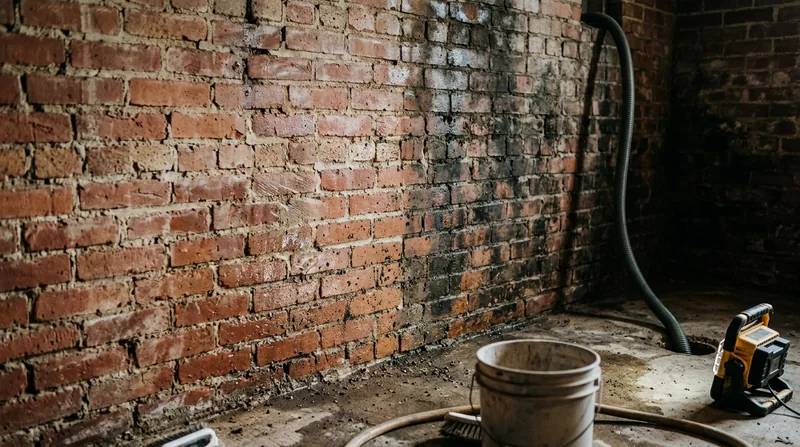




Basement Mold Remediation in Clarksville: Fix the Moisture, Not Just the Mold
When you call for Basement Mold Remediation in Clarksville, you are calling about a moisture problem that has already started growing on your framing, drywall, or floor joists. Clarksville sits on the Pennyroyal Plateau where the Red River meets the Cumberland, and that means red clay soil over cavernous limestone, bluffs that push runoff toward the river, and low ground that took on water in May 2010. Downtown Italianate and Queen Anne homes on old brick and limestone foundations, Madison Street bungalows with full and partial basements, and 1990s to 2020s poured basements in Sango all share the same failure pattern: water gets in, the basement stays humid, and mold follows. We treat the affected surfaces, contain the work area, and fix the drainage or humidity source so the growth does not come back with the next spring storm. Start with a free basement inspection so we can see what the moisture is actually doing.
Why Basement Mold Remediation Matters in Clarksville's Clay and Limestone Ground
Mold needs three things: organic material, warmth, and moisture. In a Clarksville basement, the first two are almost always present. The moisture is what we control. Red clay soil holds water against the foundation long after the rain stops, and hydrostatic pressure pushes it through mortar joints, hairline cracks, and porous block. Older homes on the bluffs above the Cumberland wick groundwater through brick and limestone footings that were never designed with a modern footing drain. Homes in Hilldale and Woodlawn with lower levels cut into hilly lots collect seepage at the wall-floor joint. The result is a musty smell, white efflorescence on the block, and visible growth on joists and rim boards within one or two humid Middle Tennessee summers.
- We identify the moisture source before we treat anything, because mold on a wall that keeps getting wet will return.
- We contain the work area with plastic sheeting and negative air pressure so spores do not spread to the rest of the house.
- We remove and dispose of porous materials that cannot be cleaned, such as saturated drywall and insulation.
- We treat structural wood and masonry with an antimicrobial application and then dry the space with commercial dehumidifiers.
- We correct the water entry with crack injection, wall sealing, or an interior perimeter drain depending on what the inspection shows.
Treating the mold without correcting the water source is a temporary fix, and we tell homeowners that plainly on the first visit.
Key info: A 1950s bungalow near New Providence with a musty basement and efflorescence on the block wall usually has water entering at the wall-floor joint, not through the wall face. Sealing the face alone will not stop it. The moisture has to be redirected to a sump basin and discharged away from the house.
For official guidance on moisture and mold in buildings, the EPA's mold resources are a useful reference for homeowners reviewing a remediation scope.
How We Run Basement Mold Remediation in Clarksville From Inspection to Final Dry-Down
Every job starts with finding out where the water is coming from. We walk the basement, check the wall-floor joint, look for efflorescence and staining, test the rim board and joists with a moisture meter, and trace the musty smell to its source. Then we build a scope that pairs the remediation with the moisture fix. In a Sango walk-out lower level, that might mean extending downspouts and regrading the slope before we treat the framing. In a Woodlawn split-level, it might mean an interior drain tile system tied to a new sump basin. The order matters: dry the space, remove the growth, correct the water, then verify with a moisture meter before we close out.
- We inspect the basement and document moisture readings, visible growth, and the water entry points.
- We set up containment and negative air pressure to keep the work area isolated.
- We remove affected porous materials and bag them for disposal.
- We treat structural surfaces with an antimicrobial application and HEPA-vacuum the space.
- We run commercial dehumidifiers and air movers until framing and masonry read dry on the meter.
- We correct the moisture source with crack injection, wall sealing, drainage, or a sump pump upgrade.
- We do a final moisture check and walk you through what to watch for in the next rainy season.
If the source is a failed sump pump or a discharge line that froze over the winter, we address that before the mold work so the basement stays dry. Learn more about sump pump installation and replacement if your basin is the weak point.
Key info: A 1970s brick ranch in Hilldale had growth on the lower two feet of the rim board and a musty smell every June. The cause was a clogged footing drain that let the water table rise against the wall. We cleared the drain, added a battery backup sump pump, treated the wood, and dried the space. The next spring, the basement stayed dry.
Remediation and Moisture-Control Methods We Use in Clarksville Basements
The right method depends on what the moisture is doing. Surface growth on drywall calls for removal and replacement. Growth on joists and framing calls for treatment and drying. Water entering through cracks calls for injection. Water entering at the wall-floor joint calls for drainage. We match the method to the source, not the other way around.
| Approach | Description | Best for |
|---|---|---|
| Containment and HEPA removal | Plastic sheeting, negative air pressure, HEPA vacuuming, and bagged disposal of affected porous materials. | Visible growth on drywall, insulation, or stored materials. |
| Antimicrobial treatment and drying | Application to framing and masonry, followed by commercial dehumidifiers and air movers until moisture readings return to normal. | Growth on joists, rim boards, and block walls that can be cleaned rather than replaced. |
| Crack injection and wall sealing | Epoxy or polyurethane injection through ports, plus masonry sealing to close the entry path. | Water entering through foundation cracks or porous block faces. |
| Interior perimeter drain and sump | Interior drain tile at the wall-floor joint feeding a sump basin and pump, with discharge routed away from the foundation. | Hydrostatic pressure and rising water table pushing water in at the cove joint. |
| Humidity control | Dehumidification sized to the basement volume, plus vapor barrier and sealing to reduce summer moisture load. | Musty smell and condensation in humid Middle Tennessee summers without a clear water entry point. |
We tell homeowners when simple crack sealing is enough and when the real problem is hydrostatic pressure that only drainage will solve.
Basement Mold Remediation Cost in Clarksville: What to Expect
Basement mold remediation in Clarksville starts at $1,500 for a contained area with a clear moisture source and a straightforward fix. That figure covers containment, removal of affected porous materials, antimicrobial treatment, and drying. The price moves up with the size of the affected area, the number of rooms involved, whether framing or structural wood needs treatment, and whether the moisture fix requires drainage work such as an interior drain tile system or a sump pump replacement. A single wall section in a 1920s bungalow is a different job than a full walk-out lower level in Sango with growth across the rim board and joists.
We recommend getting two or three estimates and comparing the scope, not just the number. A low bid that treats the mold without correcting the water source will not hold up through a Clarksville spring. For a fuller breakdown of what drives the number, see our pricing overview.
What to Look for When Hiring a Basement Mold Remediation Contractor Near Me in Clarksville
Mold remediation and waterproofing overlap, and you want a contractor who understands both. Ask whether the company is licensed and insured, whether they carry general liability and workers' compensation, and whether they will put the scope in writing before work starts. Ask for references from Clarksville homeowners with similar foundations, whether brick and limestone on the bluffs or poured concrete in St. Bethlehem. Confirm who handles permits if the fix involves structural repair or altered drainage, and check with the local building department because rules vary by jurisdiction. If you are in an HOA, confirm any exterior drainage or discharge requirements before work begins.
We are a Basement Health Association (BHA) member and we specialize in below-grade work, not general handyman services. If you want to talk through your basement before you commit to anything, contact us for a free estimate.
Basement Mold Remediation in Clarksville: Pricing Guide
| Service | Price | Details |
|---|---|---|
| Contained remediation, single area | Starting at $1,500 | Includes containment, removal of affected porous materials, antimicrobial treatment, and drying of one contained area. |
| Remediation with crack injection or wall sealing | Starting at $2,400 | Adds epoxy or polyurethane injection and masonry sealing to close the water entry path feeding the growth. |
| Remediation with interior drain tile and sump | Starting at $4,800 | Adds interior perimeter drain, sump basin, and pump when hydrostatic pressure is the source, priced by linear footage. |
| Whole-basement remediation | On estimate | Multiple rooms, framing treatment, and drainage scope require an on-site moisture reading before a number is given. |
| Travel | Included | In Clarksville and surrounding areas, no separate call-out or mileage fee. |
| Estimate | Free | Response within 24h at (931) 389-5665, no obligation to book. |
Indicative pricing, the exact cost depends on square footage, finish, and site access. Free personalized estimate within 24h at (931) 389-5665.


